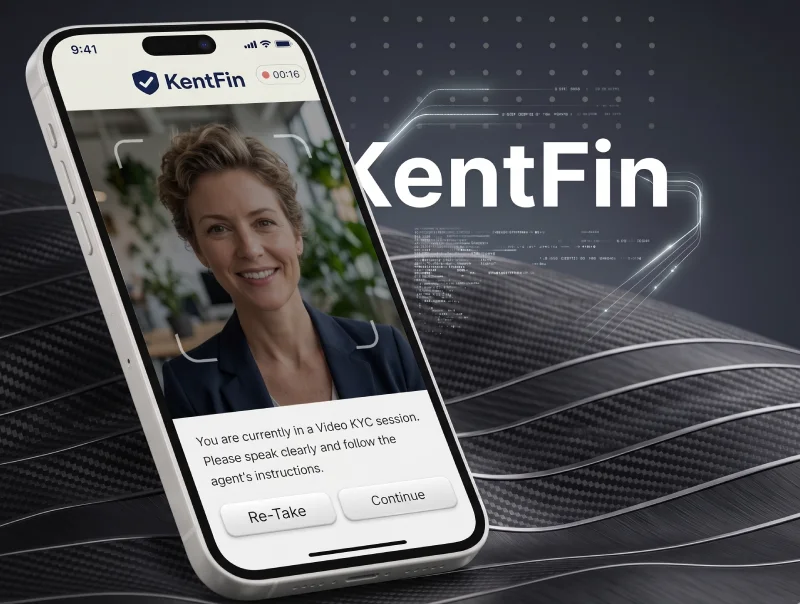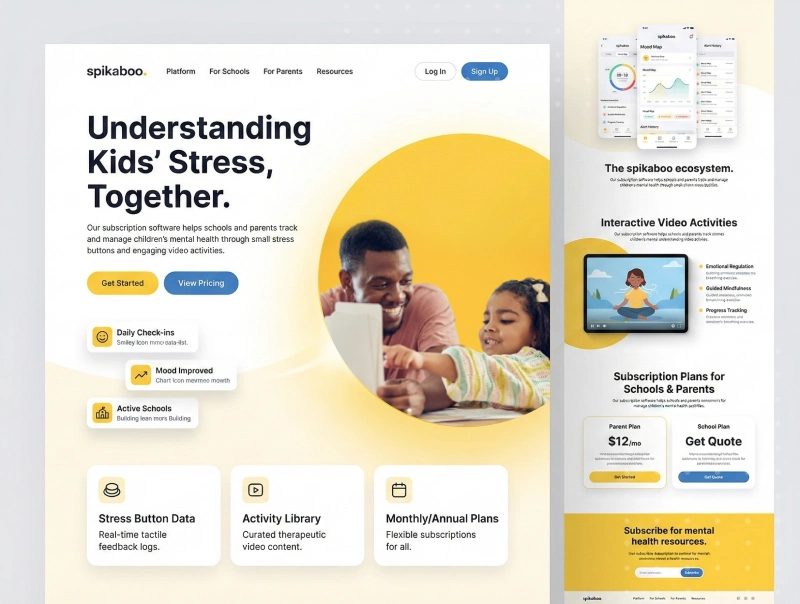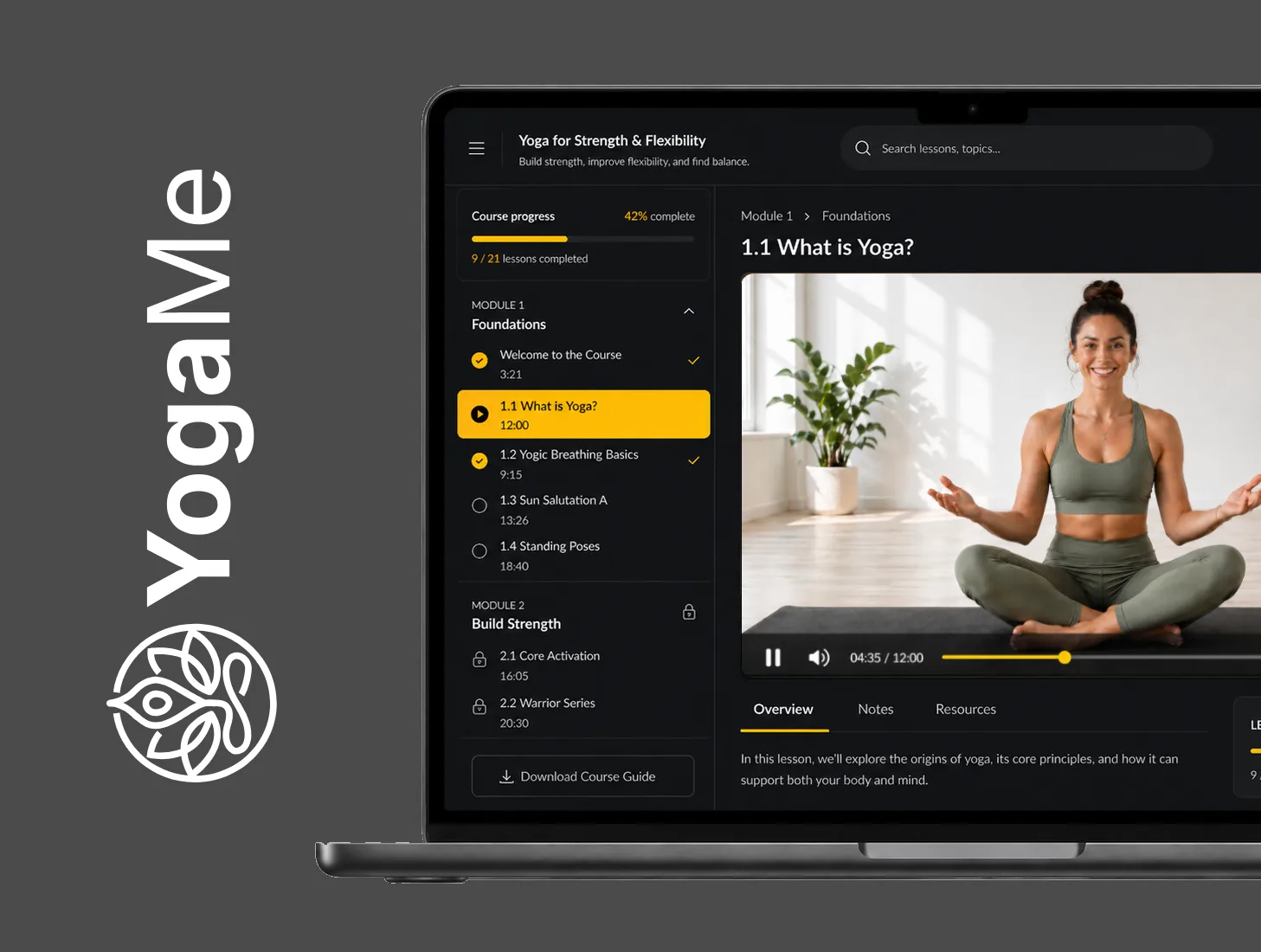
AZRUT helps YogaMe launch AI-powered LMS to support 10,000+ Users.
Netherlands
Team Size: 9
Client
We build custom AI software that automates workflows, improves decisions, and helps businesses turn AI ideas into measurable operational value.






The Problem
Most companies do not need another AI demo. They need software that survives real users, messy data, existing systems, security reviews, changing workflows, and measurable ROI.
Building blocks
Strong AI products line up data, models, context, workflows, controls, and monitoring. When one layer is weak or missing, teams see bad answers, fragile automation, or software no one trusts in production.
01
Clean, structure, connect, and prepare business data.
02
LLMs, ML models, embeddings, fine-tuning, or model selection.
03
RAG, vector search, knowledge retrieval, and business memory.
04
Where AI fits into user actions, approvals, and business logic.
05
Permissions, human review, validation, logs, and fallback paths.
06
Accuracy, hallucinations, latency, cost, drift, feedback, and quality.
Six layers, one product
What you ship is the live application itself: software engineered so all six blocks above are part of one system. Data, models, context, workflows, controls, and monitoring are not side demos. They are how the product is built, released, and operated so your business runs on software you can trust day to day.
Solutions
End-to-end AI-native software development - from product strategy through architecture, development, deployment, and continuous improvement of intelligent applications.
Build
Design and develop AI-powered applications, platforms, dashboards, and internal systems.
Automate
Create agents that research, classify, summarize, route, recommend, and trigger actions.
Generate
Build copilots, document tools, content systems, support assistants, and workflow apps.
Retrieve
Secure internal knowledge systems powered by documents, SOPs, tickets, policies, and databases.
Predict
Forecasting, churn prediction, pricing intelligence, risk scoring, and anomaly detection.
Connect
Connect AI to CRMs, ERPs, databases, APIs, cloud systems, and existing software.
Models
Our AI engineering teams design, train, and deploy models across the full spectrum of what production software actually needs: generative and agentic systems, LLM pipelines with RAG and fine-tuning, NLP and conversational stacks, computer vision, predictive and anomaly models, edge inference, reinforcement learning, document intelligence, and recommendation engines.
We match each use case to the right model families, deployment pattern, and evaluation discipline, then integrate them with your data, APIs, permissions, and guardrails so the result is software you can run, measure, and improve over time.
Enterprise-grade generative models for content generation, copilots, and reasoning workflows, built on GPT, LLaMA, and Claude. We adapt models to your domain vocabulary, implement guardrails, and integrate securely into enterprise systems with strict data privacy and access control.
Goal-driven AI agents and multi-agent systems capable of planning, memory retention, and tool usage. These systems execute multi-step workflows, interact with APIs, and continuously optimize outcomes across functions like procurement, HR, and operations without constant human intervention.
Custom LLM pipelines with retrieval-augmented generation (RAG), fine-tuning on proprietary datasets, and embedding infrastructure. Designed to reduce hallucinations, improve contextual accuracy, and deliver consistent outputs in high-stakes enterprise and regulated environments.
Advanced NLP systems for document parsing, classification, summarization, and compliance scanning. Deployed across legal, finance, and operations with high accuracy, enabling automation of contracts, emails, reports, and regulatory workflows at scale.
Production-grade computer vision models for defect detection, medical imaging, surveillance, and OCR. Engineered for real-world variability including lighting, motion, and noise, with edge and cloud deployment options for continuous visual monitoring.
Time-series and predictive models for demand forecasting, revenue planning, risk scoring, and operational optimization. Built with continuous learning pipelines to adapt to changing data patterns and improve decision accuracy over time.
Unsupervised and semi-supervised models to detect anomalies across transactions, systems, and operational data. Designed for early risk identification, fraud detection, and incident monitoring with faster detection cycles and reduced false positives.
Context-aware conversational systems for customer support, internal operations, and task automation. Optimized for intent accuracy, multi-turn conversations, and seamless integration with CRM, ERP, and enterprise workflows.
AI models deployed on edge devices for low-latency, real-time decision-making in environments with limited or no connectivity. Ideal for manufacturing, logistics, and IoT use cases requiring high reliability and on-device processing.
We apply reinforcement learning to optimize long-term decision policies in sparse feedback environments, with custom reward functions trained under real-world constraints.
Accurately extract structured data from unstructured content in record time. Automated pipelines can reduce document processing from days to hours.
Recommendation systems that adapt to user behavior in real time, from retail product ranking to content personalization without brittle manual rule updates.
Process
A practical path from idea to validated AI system without wasting months on fantasy prototypes.
01
Map processes, data sources, decision points, automation potential, risks, and ROI.
02
Define workflows, models, integrations, permissions, UI, guardrails, and success metrics.
03
Validate data quality, model output, user workflow, integrations, and business value.
04
Develop the application, AI logic, APIs, dashboards, controls, security, and QA.
05
Track usage, accuracy, cost, latency, errors, drift, feedback, and improvements.
Checklist
Use this checklist before investing in custom AI software. It helps identify if the project has the inputs needed to succeed.
Why us
Do not fight bigger competitors with bigger claims. Beat them with sharper positioning: operational AI software, not AI theater.
AI matters only when it fits how your team works, how your data moves, and where decisions happen.
UX, backend, databases, APIs, cloud, permissions, QA, observability, and AI logic work together.
Human approvals, confidence scoring, fallback paths, audit logs, and security rules reduce risk.
AI systems need monitoring, testing, feedback loops, evaluation, and cost optimization after deployment.
Engineering Depth
This is the credibility layer for CTOs and technical buyers. It shows we understand the heavy lifting behind production AI.
Chunking, embeddings, retrieval, reranking, and source-aware responses.
Model routing, function calling, prompt evaluation, and workflow logic.
Multi-step reasoning, tool use, memory, action limits, and human handoff.
Permissions, data boundaries, user roles, and secure retrieval.
Review, override, escalation, confidence thresholds, and audit trails.
Accuracy, latency, cost, drift, failures, feedback, and quality improvement.
Risk Removal
AI buyers worry about data leakage, hallucinations, runaway costs, compliance, and loss of control. This block answers those fears directly.
Architecture can isolate data, enforce access rules, and prevent sensitive data exposure.
Validation layers, source-aware responses, confidence checks, and fallback flows.
Sensitive actions can require review before AI updates systems or triggers decisions.
Token usage, model costs, API calls, caching, and infrastructure efficiency are monitored.
Role-based access, audit logs, encrypted handling, and secure API integrations.
Track quality, failures, latency, cost, drift, feedback, and improvement opportunities.
Timeline
Timelines vary based on data readiness, integrations, approval flows, security needs, and model complexity. This table gives buyers a practical T-shirt-size view before detailed scoping.
| Phase | Small Project | Medium Project | Large Project |
|---|---|---|---|
| AI Feasibility & Data Audit | 3–5 days | 1–2 weeks | 2–4 weeks |
| Prototype | 1–2 weeks | 2–4 weeks | 4–6 weeks |
| MVP Build | 4–6 weeks | 6–12 weeks | 12–20 weeks |
| Production System | 6–10 weeks | 3–6 months | 6+ months |
| Monitoring & Improvement | Optional support | Monthly improvement cycle | Ongoing governance and optimization |
OUR PORTFOLIO
Every project starts with a real-world problem.
We are committed to solving it with quality, performance, and real impact.
AZRUT built a yoga SaaS platform with subscription management, live and on-demand classes, and AI-powered recommendations. The platform supports multiple instructors, global streaming, and progress tracking, enabling YogaMe to scale without losing the personalized experience.
“AZRUT transformed our vision into reality with their expertise in AI and SaaS development. The AI-powered course generation and moderation features have enabled us to scale our platform while maintaining the personalized touch our users love.”
Emma van der Berg · Founder & CEO · YogaMe
Structured approach to building AI-native applications - from product strategy through iterative development with continuous model improvement.
We deliver production-grade AI-native software with proven expertise in generative AI, machine learning, and intelligent application architecture.
"Highly process-oriented and deeply committed - a rare combination. Their consistent support through complex moments made our product a true success."
Robert
CEO, Leading AI SaaS Company
Engage AZRUT the way your delivery needs: AZRUT Managed Service for end-to-end project ownership and delivery, AZRUT Squad for dedicated tech talent while your team manages the project, or AZRUT Advanced Squad for a full cross-functional team to accelerate delivery.

Need a fully managed team? We'll handle delivery end-to-end.
Book a Free ConsultationFrom healthcare requiring diagnostic AI to fintech needing fraud detection - we build AI-native software tailored to industry-specific challenges, regulatory requirements, and data characteristics.
STRATEGIC PARTNERS
AZRUT's strategic partnerships extend our ability to deliver exceptional results across industries. With access to thousands of certified, highly skilled professionals in recognized communities, we enhance client impact through deep expertise, agile execution, and a shared vision.
AWS
600+
Certified Professionals
Microsoft
400+
Certified Talent
GCP
200+
Certified Talent
Salesforce
100+
Certified Talent

Hear from our clients about their experience working with us
"AZRUT's talent extension model gave us the flexibility we needed without the overhead of full-time hiring."
Jan 22, 2026
AZRUT embedded three senior engineers into the client's existing squads to support a fast-growing IT startup in Amsterdam. Developers were matched to the client's tech stack and onboarded within two weeks.
AZRUT delivered senior developers who were productive from day one with no ramp-up drag or culture mismatch. They integrated seamlessly into our sprint cycles and felt like genuine team members. We met every release deadline and closed our funding round on time. AZRUT is now our go-to partner whenever we need to scale fast.

CTO, Leading IT Startup
Common questions about AI Development Services
AI-centric software is architected with AI as the core - decisions, workflows, and user experiences are designed around AI capabilities. Traditional software adds AI as features. AI-native applications improve through learning, scale intelligence, and deliver exponential value as they grow.
MVP development typically takes 12-16 weeks depending on complexity. Simple AI-powered tools can launch faster (8-10 weeks), while sophisticated ML platforms may require 20-24 weeks. We deliver iteratively with working software every 2-3 weeks.
Not always. We leverage pre-trained foundation models (GPT, Claude, etc.) that work with minimal data through prompt engineering and RAG. Custom ML models typically need hundreds to thousands of examples, but we use transfer learning, synthetic data, and data augmentation to reduce requirements.
Initial development costs are similar, but AI software has ongoing model training, inference costs, and data pipeline expenses. However, AI-native products often achieve higher margins through automation, personalization, and competitive differentiation that justify the investment.
We implement comprehensive MLOps - monitoring model performance metrics, detecting drift, establishing retraining pipelines, validating new model versions, and maintaining data quality. Models are continuously evaluated and improved based on production feedback.
Discuss your product vision and AI opportunities - we'll outline a practical development plan with clear milestones and success criteria.